
The On-Demand Revolution: How 'Near Me' Became 'Now' and What It Means for Our Future
The Ghost in the Machine: Did We Trade Our Restaurants for an Algorithm?
I did something incredibly normal last night. I tapped a few buttons on my phone, and 30 minutes later, a warm box of Pad Thai appeared at my door. It was seamless, efficient, a tiny miracle of modern logistics. And as I ate it—alone, scrolling through my feed—a profound sense of emptiness washed over me. The transaction was perfect. But the experience was hollow.
This is the kind of breakthrough that reminds me why I got into this field in the first place, but not for the reasons you’d think. It's not about the code or the network effects; it's about what happens when a technology scales so fast it fundamentally rewrites a basic human ritual. We are in the middle of a massive, uncontrolled experiment, not just on the economics of food, but on the very soul of our communities. The question isn't whether food delivery is convenient. We know it is. The question is what we’re paying for that convenience, and I don’t mean the service fee.
We’re witnessing the "API-ification" of dining. An experience that was once a rich, bundled package—the clatter of plates, the murmur of conversation, the shared space, the human connection with a server—is being deconstructed into a simple data request. Cuisine. Price. Delivery time. Click. The restaurant is no longer a place; it's a node in a network, a content provider for a platform. And I have to ask: when we strip away the humanity, what’s really left on the plate?
The Great Unbundling
For years, we’ve heard about “convenience maximalism,” a term my colleague Derek Thompson coined back in 2019. It’s the powerful, almost gravitational pull in our culture to make every single thing faster, easier, and more frictionless—in simpler terms, it’s the relentless drive to remove every human speed bump between wanting something and having it. And the platforms like DoorDash and Uber Eats are the ultimate expression of this, fueled by billions in venture capital that warped our expectations of what’s normal.
The result is a paradigm shift of staggering proportions. The fact that nearly three out of every four restaurant orders are now eaten somewhere other than the restaurant is just mind-boggling—it represents a societal transformation so swift and total that we haven't even had time to process the consequences. We’ve effectively “unbundled” the meal. We’ve taken the food out of the restaurant, leaving an empty shell behind.
One restaurateur’s quote says it all: “Delivery saved us during the pandemic. Now they are killing us.” It’s a heartbreaking sentiment that gets to the core of How Delivery Ate the Restaurant. I don’t think “killing” is quite the right word, though. It’s more like a forced, brutal evolution. The technology isn't inherently malicious; it’s just ruthlessly agnostic. It’s an engine of efficiency, and the things that make restaurants magical—the ambiance, the sense of occasion, the community—are not efficient. They are, by their very nature, beautifully, messily human.
So what does a restaurant become when its primary purpose is no longer to host people? It becomes a production facility. A "ghost kitchen." A terminal that fulfills orders. This isn't a dystopian prediction; it's already happening. But if a restaurant’s soul is in the shared act of breaking bread, what happens when the tables are all empty?
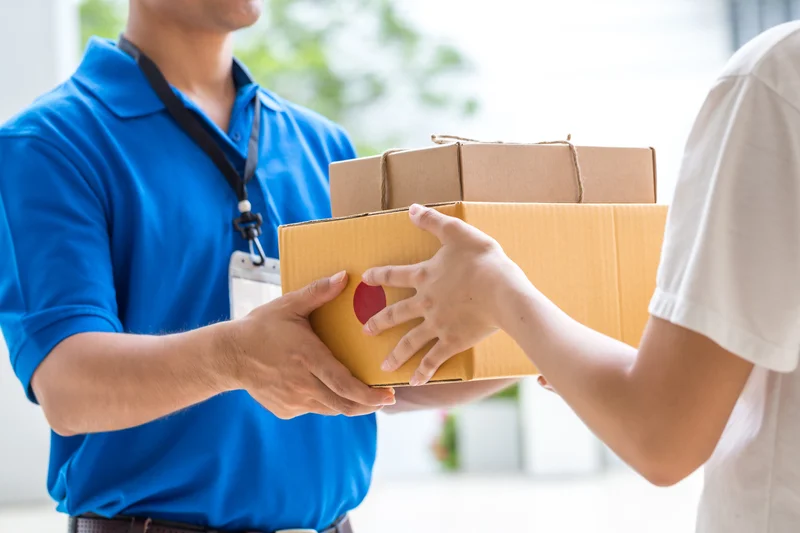
The Human Error in the Code
Here's where the clean, elegant logic of the algorithm slams into the chaos of the real world. This entire system of instant gratification is built on the backs of human beings, and the code has no line items for their dignity or safety. When I read reports like Belfast: Delivery driver in hospital following Dublin Road assault, where a driver was pulled from his car while simply trying to do his job, I honestly felt a knot in my stomach. Is that the hidden cost of getting my dinner 10 minutes faster?
The system is designed to hide this friction. We, the users, see a clean interface with a map and a timer. We don’t see the driver risking their safety late at night, the pressure they’re under, or the paper-thin margins they survive on. This feels eerily familiar, doesn't it? It’s a digital echo of the early Industrial Revolution, where incredible leaps in production and efficiency were made by treating human labor as just another raw material to be optimized. We eventually built new social contracts—labor laws, safety standards, weekends—to civilize that raw capitalism. Are we not at a similar inflection point for the gig economy?
The platforms have created a new class of middleman, a digital tollbooth between the restaurant and the customer, all while promising to cut them out. They’ve perfected a model that thrives on a precarious, often-vulnerable workforce. The ethical questions here are enormous. How do we build a system that offers the undeniable benefits of on-demand service without treating its human components as disposable? How do we write a better code—a social code—that values the person bringing the pizza delivery as much as the pizza itself?
Rebuilding the Table
It’s easy to look at the empty dining rooms and the exploited workers and feel a sense of despair. It feels like we’ve made a terrible trade. But my job is to see the next move on the board, to find the potential for something better rising from the disruption. The old model is cracking under the strain, yes. But that’s when new models can emerge.
The technology itself—the logistics, the networking, the user interface—is a modern marvel. What if we pointed that incredible power toward connection instead of just extraction? Imagine if these platforms evolved beyond simple grocery delivery and became conduits for genuine culinary experiences. What if an aspiring chef could use the app not just to ferry boxed meals, but to organize a pop-up dinner in a local park? What if a group of neighbors could use it to create a shared, communal meal, with different dishes arriving from several local kitchens at once?
We could use this logistical genius to solve real problems, like creating networks to combat urban food deserts or connecting farms directly to consumers with unprecedented efficiency. The platform doesn't have to be the end of the story. It can be the beginning of a new one. The choice isn't just between the old-world restaurant and the sterile isolation of same day delivery. That’s a false dichotomy. The future is about integration. It’s about asking how we can use these powerful new tools to augment, rather than amputate, our human need for community.
The Next Course Is Being Plated
We’ve spent a decade optimizing for a single variable: convenience. In the process, we accidentally devalued another: connection. But this isn’t a eulogy for the American restaurant; it's a call to action. The transaction is seamless, but the human experience is what we’re truly hungry for. The technology has given us an incredible gift of efficiency. Now it's our turn to inject it with purpose, to demand a system that delivers not just our food, but a way to bring us back to the table.
Tags: delivery
Zcash's 828% Rally: A Sober Look at the Data Behind the Hype
Next PostThe Binance-Trump Connection: What the Data Reveals About the Pardon and Market Reaction
Related Articles