ZKsync: Vitalik's Backing vs. Atlas Upgrade
Generated Title: ZK Token's 50% Jump: Buterin Bump or Sustainable Surge?
The ZK token associated with ZKsync recently experienced a notable surge, jumping 50% after Ethereum co-founder Vitalik Buterin publicly endorsed the project's contributions to the Ethereum ecosystem. The immediate reaction is clear: price goes up. But the question is whether this is a blip or the start of a trend.
Decoding the Buterin Effect
Let's break down what happened. ZKsync launched its Atlas upgrade, boasting improvements to transaction speed (up to 30,000 transactions per second, they claim) and enterprise-grade scalability. Shortly after, Buterin tweeted praise for ZKsync's "underrated and valuable" work. The ZK token then climbed from around $0.03 to $0.045.
Now, correlation doesn't equal causation, but it's hard to ignore the timing. Buterin's endorsement acted as a clear catalyst. The question is: why? Is it simply the "Buterin effect," where anything he touches turns to (digital) gold? Or is there something more substantial at play?
The Atlas upgrade itself is noteworthy. A claimed 30,000 TPS with full Ethereum compatibility is significant, if true. The upgrade also includes "Airbender," a system designed for faster cross-chain settlements. All of this points towards a more robust and efficient ZKsync network. But efficiency doesn't always translate to value.
Digging Deeper: Beyond the Hype
ZKsync is positioning itself as a key player in crypto payroll and banking solutions. The Atlas upgrade, according to their marketing, is designed to facilitate systems combining private control with interoperability – ideal for payments, tokenized assets, and cross-border settlements. They’re selling a vision of seamless, low-cost transactions, particularly for startups and SMEs.
The claim that the Atlas upgrade can process over 15,000 transactions per second (the number cited in one article, although ZKsync claims 30,000 elsewhere) at minimal cost sounds great on paper. But what's the actual cost per transaction? What's the network latency under real-world conditions? These are the numbers that matter, and they’re conspicuously absent from the press releases. I've looked at hundreds of these announcements, and this level of vagueness is pretty standard.
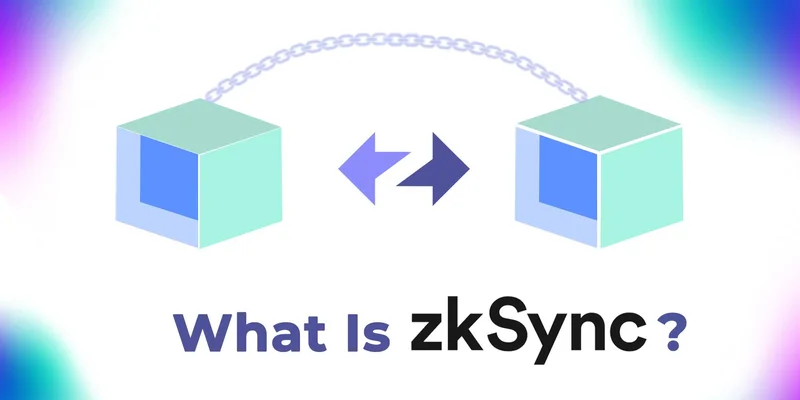
ZKsync is also touting potential partnerships with stablecoin issuers and DeFi protocols. A partnership with ADI Chain, which has a UAE dirham-backed stablecoin, is mentioned as a potential avenue for fast and secure transactions in the UAE. These partnerships are essential for driving adoption, but they are still just potential at this point.
The price of ZK Coin itself saw a spike, briefly hitting $0.0633. ZK token jumps 50% after Vitalik Buterin backs ZKsync post Analysts are suggesting that maintaining a price above $0.0547 could signal a rebound towards $0.0784, with a longer-term goal of reclaiming the $0.116 support base. However, these are just predictions. The crypto market is notoriously volatile (as anyone who's been around for a full cycle knows), and technical analysis is, at best, an educated guess.
ZKsync is aiming to enhance infrastructure for enterprises and institutions with the Atlas upgrade, including a high-performance sequencer. But let's be clear: the real test will be adoption. Are enterprises actually going to use ZKsync for payroll and other financial operations? The technology is only half the battle; convincing businesses to change their established processes is the other, often harder, half.
Is It Just Another Pump and Dump?
Buterin's endorsement is undoubtedly a positive signal for ZKsync. But, as a former hedge fund analyst, I have to ask: What's the long-term value proposition? Can ZKsync deliver on its promises of speed, scalability, and low-cost transactions? And, more importantly, can it attract the enterprise clients it needs to justify its valuation?
The upgrade includes Airbender, a system for quick confirmations and fast cross-chain settlement. Developed by Matter Labs, Atlas aims to facilitate systems combining private control with interoperability. But at the end of the day, it comes down to adoption.
A Glimmer of Hope, But Proceed With Caution
Tags: ZKsync
Pizza's Expanding? Who Cares.
Next PostWorld Liberty Financial's Token Launchpad: What's the Deal?
Related Articles