
SpaceX Launch Today: Confirmed Time, Live Stream Details, and Mission Status
The Cape Canaveral Traffic Jam: A Data-Driven Look at November's Launch Cadence
====================================================================================
By Julian Vance
We need to talk about the numbers coming out of Florida’s Space Coast, because the raw data is starting to look less like aerospace engineering and more like a high-frequency trading algorithm. By the end of October, 90 orbital rockets had already torn through the Florida sky in 2025. The annual record of 93 is all but certain to be broken, likely within the first week of November.
This isn’t a story about ambition or the romance of exploration. This is a story about logistics. The Cape is no longer just a historic stage for national triumphs; it has become a brutally efficient launchpad, a utility operating at a cadence that strains credulity. The constant public inquiry—"was there a spacex launch today?" or "what time is spacex launch today?"—is a lagging indicator of a new reality. The answer is almost always yes, and the time is almost always soon.
But looking at the aggregate number of launches is a rookie analytical mistake. It masks the profound divergence happening on the pads. The real story is found in the distribution of that launch tempo. What we’re witnessing isn't a single, unified boom. It’s a market splitting into two distinct, and perhaps incompatible, models of operation.
The Relentless Cadence of the Workhorse
Let’s dissect the November schedule. On Wednesday, November 5, a Falcon 9 is slated to launch. Three days later, on Saturday, November 8, another Falcon 9. Two days after that, on Monday, November 10, yet another. Three launches from one company in six days. All of them are for Starlink.
This is the part of the data that I find genuinely puzzling from a traditional aerospace perspective. This isn't a launch schedule; it's a bus schedule. The missions have become so routine that the pre-flight coverage and public attention have been compressed into a tight, predictable loop. The search traffic for `spacex launch today live` spikes for a few hours, the rocket goes up, the booster lands, and the cycle resets. The drama has been systematically engineered out of the process, replaced by the mundane hum of operational excellence.
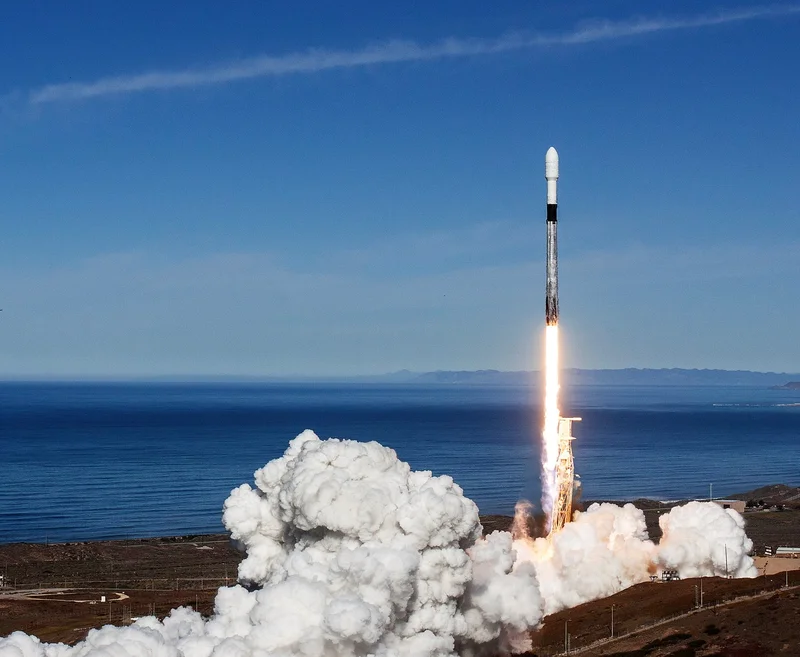
This cadence is a powerful moat. It’s like a factory that has optimized its assembly line to the point where competitors aren’t just struggling to build a similar car, they’re struggling to even conceive of building a factory that efficient. SpaceX isn’t just launching rockets; it’s running a utility service for low-Earth orbit, and its near-monopoly on high-frequency launch is the result. But this relentless pace raises a critical, and often unasked, question: What is the true operational cost of this tempo, not just in dollars, but in personnel burnout and ground infrastructure strain? Are we measuring the hidden liabilities of running at a pace that leaves no margin for systemic error?
The High-Stakes Outliers
Away from the steady drumbeat of Falcon 9s, the rest of the November manifest reads like a collection of high-stakes gambles. These are the outliers, the low-frequency events where the outcome of a single launch can define a company’s entire year, or even its future.
First, there’s United Launch Alliance. On the same night as a Starlink mission, an Atlas V is scheduled to lift a multi-billion-dollar ViaSat-3 communications satellite. This is the old model of spaceflight: a single, high-value asset launched on an exquisitely reliable (and exquisitely expensive) rocket. The launch window is tight—just 44 minutes. There’s no room for the casual-seeming flexibility of a four-hour Starlink window. Everything about this mission screams precision, legacy, and enormous financial consequence.
Then we have the real wild card: Blue Origin. Sometime in early November, the company plans to launch its second-ever New Glenn rocket. The first flight is a test. The second is where the pressure truly mounts. This isn’t a routine satellite delivery; it’s the NG-2 mission, carrying NASA’s twin ESCAPADE spacecraft (designed to study the Martian magnetosphere) on a trajectory to Mars. The manifest shows five major launches in early November—to be more exact, six if you count India’s recent flight, but five from the Cape alone (Is there a launch today? Upcoming SpaceX, Blue Origin, ULA launch schedule at Cape Canaveral). Of those, this is the one with the highest beta. A success validates a decade of development and positions New Glenn as a credible competitor. A failure would be a catastrophic setback, not just for Blue Origin, but for a market desperate for a second heavy-lift provider.
This stark contrast paints a picture of a deeply fractured industry. On one side, you have a volume player achieving unprecedented scale. On the other, you have bespoke providers managing immense, concentrated risk on each flight. Is there a viable middle ground, or is the market destined to bifurcate completely? And how does a company like Blue Origin transition from the second category to the first without breaking itself in the process?
The Global Context and the Long Tail
While the Cape Canaveral traffic jam dominates headlines, it's a mistake to view it in isolation. On November 2, India’s space agency, ISRO, successfully launched its most powerful rocket, the LVM3. It carried the CMS-03, a heavy military communications satellite weighing 9,700 pounds (or more precisely, 4,400 kilograms), into geostationary transfer orbit (India launches a huge military communications satellite to orbit using its most powerful rocket). This isn't a commercial venture; it's a clear statement of sovereign capability. It underscores that the new space race is as much about geopolitical positioning as it is about commercial enterprise. National security interests are driving heavy-lift development in parallel to the commercial boom, creating another layer of complexity.
Looking further out on the Cape’s schedule reveals the "long tail" of even higher-stakes missions. Artemis II, currently slated for no earlier than February, will send four astronauts on a trip around the moon. Sierra Space’s Dream Chaser spaceplane has a TBA launch date. These aren’t just launches; they are foundational missions for entire programs, operating on timelines measured in years, not days. They represent the monumental, government-backed ambitions that still anchor the industry, existing on a completely different plane from the weekly `spacex rocket launch today` cycle. They are a reminder that for all the talk of commercialization, the fate of human spaceflight still rests on a handful of launches where failure is not an option.
A Barbell Economy in the Sky
When you strip away the fire and the romance, the data points to one conclusion: the space launch industry is a barbell economy. On one end, you have SpaceX, the high-volume, low-margin-per-unit operator that has turned access to orbit into a commodity. On the other end, you have everyone else, managing high-risk, high-value, bespoke missions where every launch is a make-or-break event. The middle ground is rapidly vanishing. November’s schedule isn’t just a list of upcoming events; it’s a snapshot of this reality. The most important question isn't whether the Cape will break its launch record. The question is how long this imbalanced, top-heavy structure can remain stable before something gives.
Tags: spacex launch today
Decoding Today's Markets: What's Happening in US & Global Markets and What It Means for Tomorrow
Next PostRocket Launch Today: The Complete Schedule and How to Watch History Being Made Live
Related Articles